
'This novel format of diplomacy -- the informal summit -- will not only facilitate bilateral communication and reduce miscalculations at the very top level of the two governments, but possibly open the space for China and India to speak in one voice on various issues of mutual concern,' note Feng Renjie and Ding Kun Lei

Kailash Satyarthi, co-winner of the Nobel Peace Prize, in front of packed crowd made a rousing speech asking every person to come together and set our children free. He honoured those who came before him and also said that he accepted this honour on behalf of all the martyrs and activists in India. Here's the transcript of his moving acceptance speech.

If the chemistry between Modi and Xi Jinping goes well, it will herald a new future not just for the region but for the world, says Tarun Vijay.

'The darkest days of Indian democracy were (during) the Emergency when basic democratic rights were suspended. For a time it seemed as though India would move along the East Asian model -- everybody works hard, nobody asks questions, certainly not of the government.' 'There are people who say we are headed that way, but I am not persuaded by the evidence,' says Mahesh Rangarajan who recently resigned as director of the Nehru Memorial Museum and Library in New Delhi.
A sensational interview on India-China ties, with the man most qualified to answer.

There are some larger policy issues related to the submarine as a platform and the modernisation programme of the navy that merit brief recall and review, says C Uday Bhaskar

Srikanth Kondapalli on what to expect from the seventh BRICS summit meeting to be held in Russia in July.

'J&K continues to have the highest concentration of military personnel anywhere in the world and the alienation of the Kashmiri has increased in the last ten years than ever before.'
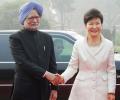
South Korean President Park Geun-hye's visit to India will enhance economic and military ties between the two countries and give the relationship a strategic dimension, says Jiye Kim.

At the 53rd annual convocation ceremony of the IIT-Bombay, Nobel laureate Kailash Satyarthi shared stories of his struggle and victories.

This is the joint statement issued by the ministry of external affairs on the visit of US President Barack Obama to India.
Prime Minister Narendra Modi on range of issues -- from Rafale deal to Ram temple and triple talaq.

The Indian Spring represented by Anna Hazare's anti-corruption campaign, which has culminated in the Aam Aadmi Party's impressive electoral debut in New Delhi, began around the same time as the Arab Spring in 2011 but they led to different outcomes in India and the Arab world, says Ramesh Ramachandran.

'Think about this: A widow of a jawan is drawing only Rs 3,500. If OROP is implemented, she will get additional Rs 1,500. These poor girls are young and have no source of income; they are trying their best to just make ends meet. It is the pain of these situations that has driven me to this.' 'We don't want to put pressure on the government -- that's not our intention. We have full faith in our prime minister. We are asking for a meeting with him, and when we get that, we are sure he will not only give us what we are asking for, but 10 per cent extra.' Major General Satbir Singh, who headed the OROP agitation at Jantar Mantar, speaks out.
